/01
The Building of Maie Salameh
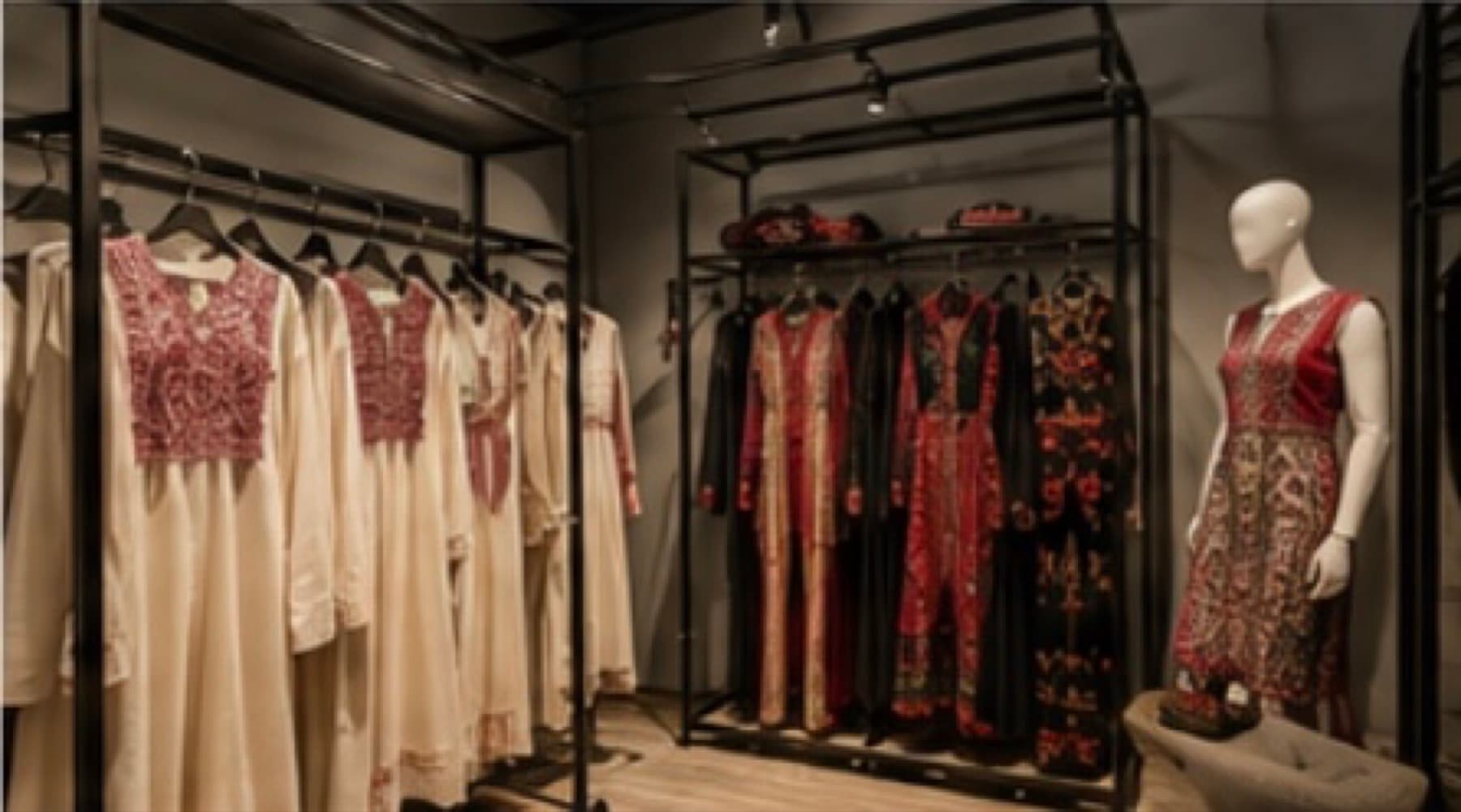
The house begins with memory: family photographs, old garments, stone courtyards, village motifs, and the belief that Palestinian dress can keep moving without losing its root.

Journal
The Making
/01
The house begins with memory: family photographs, old garments, stone courtyards, village motifs, and the belief that Palestinian dress can keep moving without losing its root.
/02
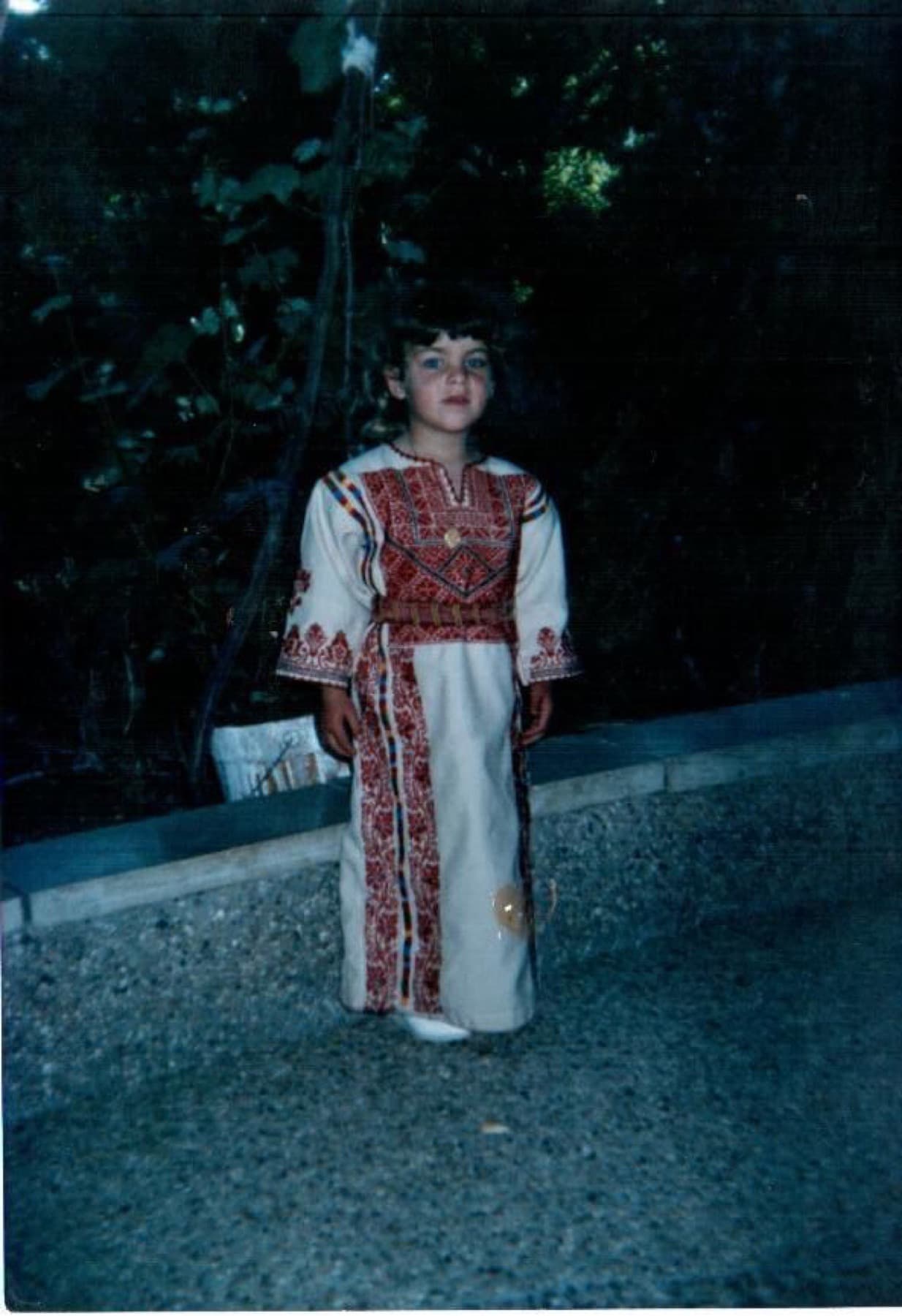
As a child, tatreez was not only a pattern on cloth. It appeared in celebrations, family rooms, inherited dresses, market colors, and the small details women carried with pride.
/03
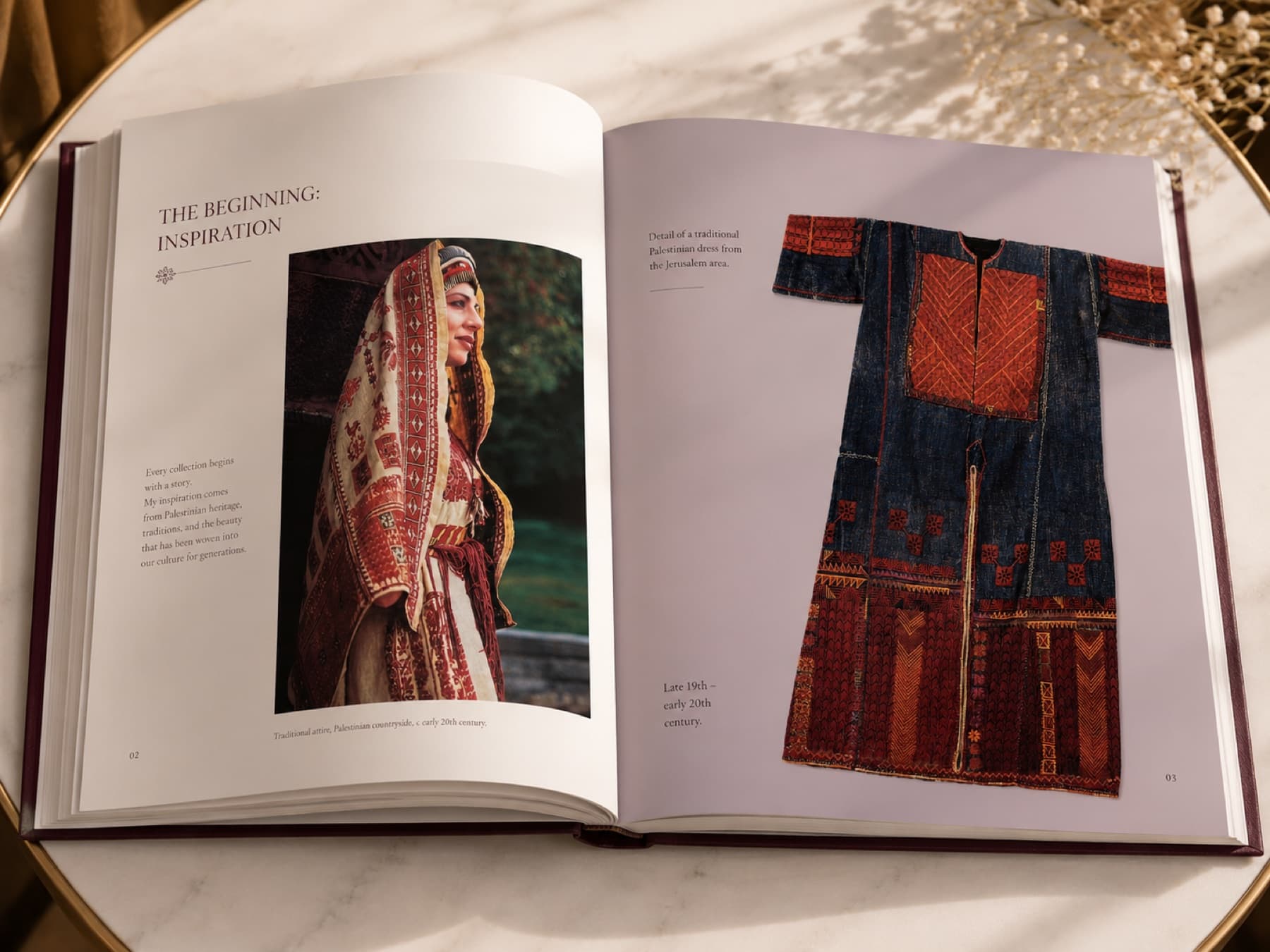
Before a garment is drawn, Maie gathers references: village embroidery, museum pages, architecture, nature, old notes, symbolic color, and the emotional atmosphere of a collection.
/04
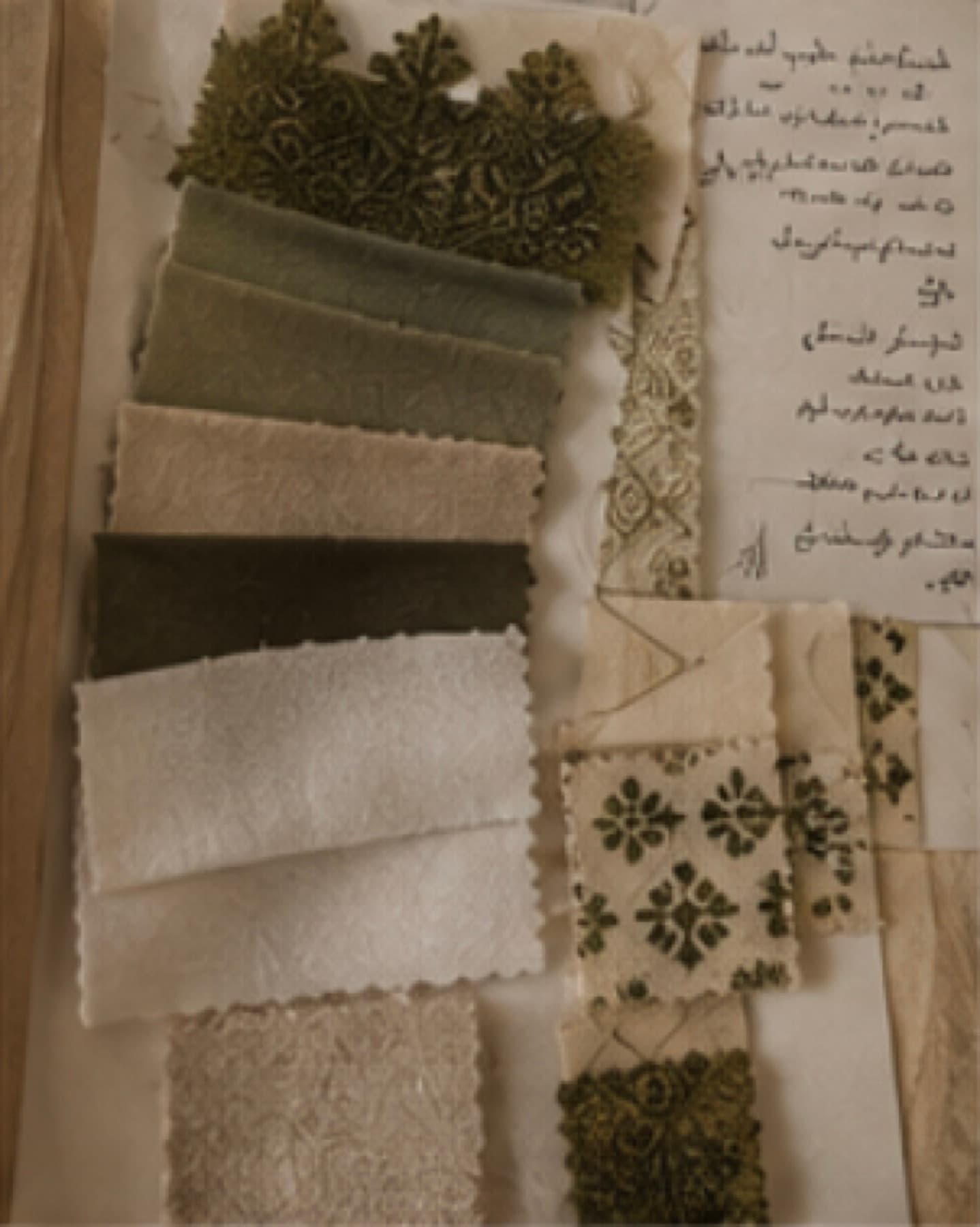
Each piece moves from feeling to silhouette. Sketches, fabric swatches, embroidery placement, proportion, and movement are studied until the garment begins to speak clearly.
/05
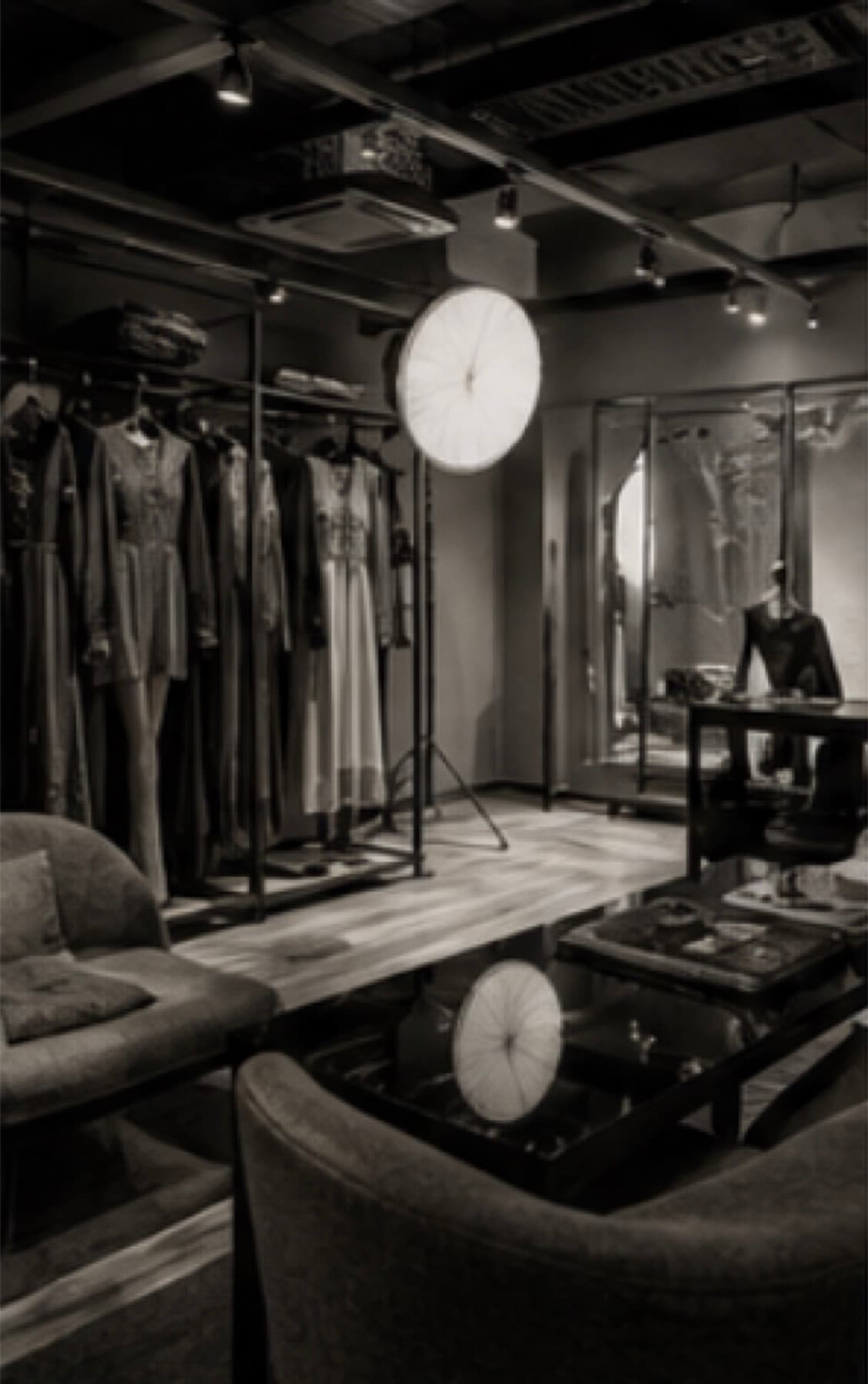
The atelier is where the story becomes physical: cutting, draping, fitting, embroidery, hand-finishing, pressing, and the patient corrections that make a piece feel inevitable.
/06
When the piece leaves the studio, it enters another life: a bride, a public stage, a photograph, a family archive, or a woman carrying heritage in her own way.
Heritage
Tatreez is not nostalgia. It is a living visual system, holding place, family, ritual, and resistance inside thread.
Process
The first decision is rarely the silhouette. It begins with a feeling: a room, an old garment, a color remembered from childhood.
Craft
Fabric carries weight before it carries shape. Every textile asks for a different kind of patience.